While analyzing stock price movements, the primary focus is usually on price action. However, trading volume is equally important because it validates the strength and reliability of a price move.
Volume refers to the total number of shares traded on the stock exchange during a particular trading session.
Why is Volume Important?
1. Trend Confirmation
Volume confirms the strength of a price trend. A rise in price accompanied by increasing volume indicates strong buying interest, making the trend more reliable.
2. Breakout Confirmation
When a stock breaks above a key resistance level on high volume, it confirms strong market participation. Such breakouts are more likely to sustain than those occurring on low volume.
3. Breakdown Confirmation
When a stock breaks below a key support level on high volume, it indicates strong selling pressure. High-volume breakdowns are generally more reliable and often signal further downside, while low-volume breakdowns are more prone to failure.
Interpreting Volume in Technical Analysis
1. Bullish Trend Confirmation – Rising Price on High Volume
- Indicates strong buying interest from investors and traders.
- Confirms that the uptrend is supported by conviction and is more likely to continue.
- High trading volume validates the breakout, increasing the probability of a sustained uptrend.
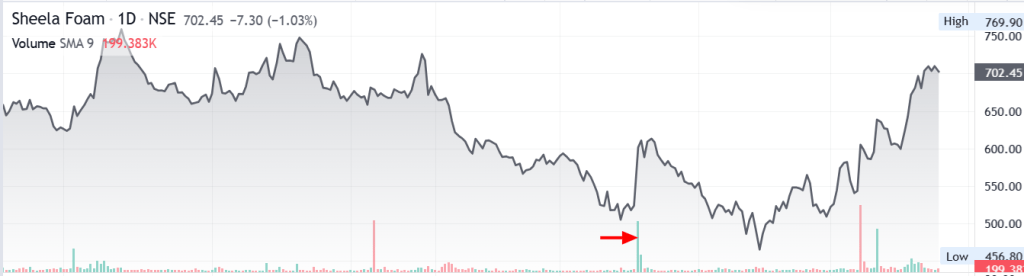
Graph source: Moneycontrol
2. Bearish Volume Divergence – Rising Price on Low Volume
- Indicates weak buying participation despite rising prices.
- The rally lacks broad market participation and institutional support.
- The price may continue rising temporarily, but the move is less reliable and more vulnerable to a reversal.
Interpretation:
Ideally, rising prices should be accompanied by increasing volume. When prices rise while volume remains low or declines, it is known as bearish volume divergence, signalling that the uptrend may be losing strength.
3. Bearish Trend Confirmation – Falling Price on High Volume
- Indicates strong selling pressure as investors and traders exit the stock.
- Confirms that the downtrend is supported by conviction.
- High selling volume validates the breakdown, increasing the probability of further downside.
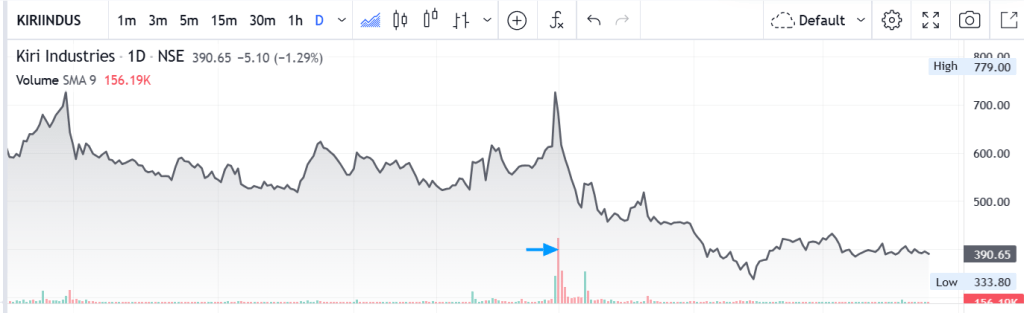
Graph source: Moneycontrol
4. Bullish Volume Divergence – Falling Price on Low Volume
- Indicates limited selling interest despite falling prices.
- The decline lacks strong selling conviction.
- Selling pressure may be weakening, increasing the possibility of price stabilization or a reversal if buyers return.
Interpretation:
When prices fall while trading volume decreases, it is known as bullish volume divergence. This suggests that sellers are losing momentum and the downtrend may be approaching exhaustion. Traders often wait for additional confirmation before expecting a reversal.
Key Takeaway
Price tells you what is happening. Volume tells you how strongly the market believes in that move.
A price move supported by high trading volume is generally more reliable than one occurring on low volume. Successful traders combine price action and volume analysis to:
- Confirm market trends.
- Validate breakouts and breakdowns.
- Identify bullish and bearish volume divergences.
- Avoid false trading signals.
Golden Rule
Price shows the direction. Volume confirms the conviction.

