Rethinking the Rule of 100: A Modern Approach to Investment Risk

Rethinking the Rule of 100

A Story to Begin With

Two investors walk into the same financial planning office.

The first is 28 years old, earning a decent salary but juggling a home loan, car EMI, and plans for a child’s education. The second is 62, recently retired, debt-free, with accumulated savings and a steady pension.

According to the Rule of 100, the younger investor should aggressively invest in equities, while the older one should sharply reduce stock exposure. But when you look at their real financial lives, the picture feels counterintuitive. The younger investor cannot afford large losses, while the retired investor may actually have the stability to ride out market volatility.

This disconnect raises an important question:
Should age alone determine how much investment risk you take?

That question sits at the heart of this article.


The Rule of 100 – Asset Allocation by Age

When it comes to investing, one of the most common questions people ask is:
How much should I invest in equities and how much in safer assets?

To simplify this decision, financial planners have long relied on age-based formulas—the most popular being the Rule of 100.

At first glance, the rule seems logical and easy to follow. But does it truly reflect how real people earn, save, and spend today? Let’s take a closer look.


What Is the Rule of 100?

The Rule of 100 is a basic guideline used to determine asset allocation based on age.

Formula:
100 − Your Age = Percentage of your portfolio invested in equities

The remaining portion is allocated to bonds, debt instruments, or other relatively low-risk assets.

Simple Examples

  • Age 30
    • 70% in stocks
    • 30% in bonds/debt
  • Age 50
    • 50% in stocks
    • 50% in bonds/debt

The Logic Behind the Rule

The rule is built on a straightforward assumption:
risk tolerance declines with age.

Younger investors are expected to have:

  • Longer investment horizons
  • More time to recover from market downturns

Older investors, on the other hand, are assumed to:

  • Prefer stability over growth
  • Focus on capital preservation and steady income

This thinking made sense decades ago—but markets, careers, and lifespans have changed.


Why the Rule Evolved: Rule of 110 and Rule of 120

As life expectancy increased and inflation became a bigger threat, financial advisors began adjusting the formula.

Rule of 110

110 − Age = Equity allocation

  • Age 30 → 80% equities
  • Age 50 → 60% equities

This version recognizes that:

  • People are working longer
  • Retirement needs are larger
  • Equity growth is crucial to beat inflation

Rule of 120

120 − Age = Equity allocation

  • Age 30 → 90% equities
  • Age 50 → 70% equities

This rule is typically suggested for investors with higher risk tolerance or those relying heavily on equity markets for long-term wealth creation.

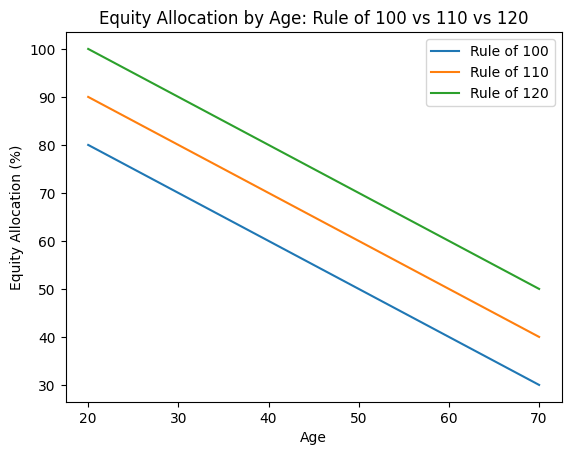
A comparison of Rule of 100 vs Rule of 110 vs Rule of 120 is shown in the chart below:
What the Chart Shows

  • X-axis: Investor age
  • Y-axis: Suggested equity allocation (%)

Three declining lines represent:

  • Rule of 100 (most conservative)
  • Rule of 110 (moderate)
  • Rule of 120 (most aggressive)

Key Takeaways:

  • All three rules reduce equity exposure linearly with age
  • The difference between rules becomes more pronounced at younger ages
  • Even at age 60–70, Rule of 120 still suggests meaningful equity exposure, reinforcing the inflation-risk argument

The Big Problem With All These Rules

Despite their popularity, the Rule of 100, 110, and 120 share one major flaw:

They assume age alone determines risk capacity.

In reality, age tells only part of the story.


A Contrarian Perspective: When the Rule Breaks Down

Younger Investors Aren’t Always Risk-Takers

Many young investors face:

  • Lower incomes and limited savings
  • Home loans, car EMIs, and education expenses
  • Small emergency buffers

For them, a sharp market fall can cause real financial stress. Even though time is on their side, their ability to absorb losses may be limited. In such cases, aggressive equity exposure can do more harm than good.

Older Investors May Have Higher Risk Capacity

Ironically, many older or retired investors:

  • Are free from major financial obligations
  • Have accumulated wealth, pensions, or rental income
  • Can emotionally handle short-term volatility

For them, maintaining meaningful equity exposure may actually be necessary to protect purchasing power against inflation.


The Real Question: Risk Tolerance or Risk Capacity?

This is where most age-based rules fall short.

  • Risk tolerance is how comfortable you feel with volatility
  • Risk capacity is whether your finances can survive a downturn

Risk capacity depends far more on:

  • Cash flows
  • Liabilities
  • Financial security
  • Emergency reserves

—not just your age.


Final Thoughts

The Rule of 100 and its modern variations are useful starting points, not formulas to follow blindly.

Smart asset allocation requires balancing:

  • Age
  • Income stability
  • Financial responsibilities
  • Long-term goals
  • The ability—not just the willingness—to take risk

In investing, simplicity helps.
But context matters even more.


What Do You Think?

  • Should age alone determine how much risk an investor takes?
  • Have your financial responsibilities increased or reduced your ability to invest in equities?
  • For younger investors with EMIs, is aggressive equity allocation practical—or risky?
  • Should retired investors reduce equity exposure simply because of age?
  • Which matters more: risk tolerance or risk capacity?
  • Do you follow the Rule of 100 (or 110/120), or have you created your own approach?

👉 Share your views—your experience may help others rethink how they invest.

The Magnificent 7: Are AI Stocks Setting Up for a Bubble?

Overview

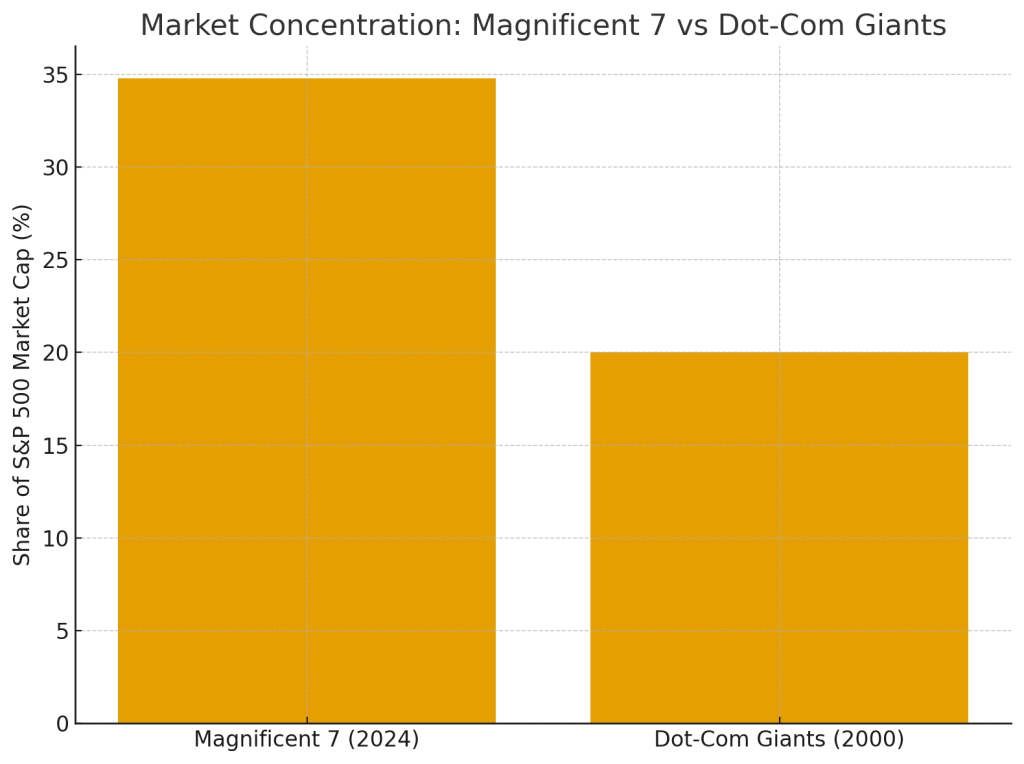
As of late 2024, the Magnificent 7 — Alphabet (Google), Amazon, Apple, Meta Platforms, Microsoft, Nvidia, and Tesla — collectively account for $16 trillion of the S&P 500’s $46 trillion total market capitalization.
This means these seven companies alone represent 34.8% of the entire index, a massive increase from about 10% in 2014.

For historical context, even during the dot-com bubble of 2000, the largest tech companies never exceeded 20% of the S&P 500. Today’s concentration level is therefore unprecedented.

Over the recent years, the heavy weighting of AI-focused companies has been a major driver of the S&P 500’s growth. This dependence has led many analysts to warn of a potential AI-driven valuation bubble and the risk of a sharp correction if expectations disappoint.

Risk of an AI Bubble Bursting

1. Valuation Risk

AI-focused companies are increasingly trading at valuations that far exceed their underlying fundamentals, echoing patterns seen during the Dot-Com era. For example, Palantir reported $1.18 billion in Q3 2025 revenue and is projecting around $4.40 billion for the full year. Yet its market capitalisation surged to nearly $450 billion, implying a valuation of 115–120× sales—levels typically associated with speculative excess rather than sustainable financial performance. This disconnect between valuation and fundamentals heightens the risk of sharp corrections if anticipated growth fails to materialize.

Many analysts argue that valuations are pricing in hyped future revenues, not current financial performance or realistic near-term applications of AI.

2. Capex vs. Actual Returns

Big Tech is expected to invest $5 trillion on AI-related infrastructure — data centers, chips, model training, and energy facilities.

However, the return profile does not yet justify this scale of investment:

  • Only around 5% of businesses currently use AI in full production environments.
  • Productivity gains remain slow and uneven.
  • Many AI tools still lack clear monetization paths.

This mismatch heightens the risk that expected AI-driven profits may not materialize soon enough to justify the massive capital outlay.

3. Rising Debt Financing

Despite being historically cash-rich, AI-focused tech giants have been taking on large amounts of debt to finance data-center expansion.

For example:

  • Oracle reported $124 billion in total obligations (including operating lease liabilities) as of Nov 2025 — up from $89 billion a year earlier.
  • Weak earnings combined with rising debt prompted S&P and Moody’s to revise Oracle’s credit outlook to negative.

Analysts see parallels to the dot-com era, when companies overborrowed to fund speculative, unproven technologies. If AI revenues lag, these debt loads could rapidly become unsustainable.

4. “Circular” Investment and Revenue Deals

An emerging concern is the rise of vendor-financed growth loops within the AI ecosystem.

A notable example involves:

  • Nvidia, which committed up to $100 billion in staged investments into OpenAI, contingent on the deployment of new AI infrastructure (e.g., gigawatts of data-center capacity).
  • OpenAI then uses the capital to purchase Nvidia chips, creating a circular flow of investment → purchase → revenue.

Analysts and regulators have pointed out that this model may artificially inflate demand and revenue, echoing vendor-financing practices seen in earlier speculative periods.

5. Concentration Risk in the S&P 500

With the Magnificent 7 making up nearly one-third of the total S&P 500, the broader market’s stability is increasingly tied to the performance of a small cluster of AI-centric companies.

A synchronized decline in these firms — due to AI monetization delays, regulatory pressure, competitive threats, or earnings disappointments — could:

  • Trigger broad market corrections
  • Mirror the systemic tech collapse of 2000
  • Reduce retirement savings, given heavy household exposure to index funds
  • Increase volatility across global equity and credit markets

The S&P 500’s dependence on a single technological narrative — AI dominance — heightens systemic vulnerabilities.


Summary

The rapid rise of AI has created unprecedented concentration within the S&P 500. While AI has transformative potential and the Magnificent 7 possess stronger fundamentals than the tech leaders of 2000, valuation excesses, massive capex commitments, rising debt, circular revenue arrangements, and extreme index concentration have raised concerns about a potential AI bubble.

If AI growth and monetization fall short of current expectations, the resulting correction could echo — or potentially exceed — the impact of the dot-com crash.

How to use RSI for Trading Success

Relative Strength Index (RSI)


A momentum indicator developed by J. Welles Wilder Jr. (1978) that measures the speed and magnitude of price changes. Traders use RSI to identify whether a stock is overbought or oversold.

RSI Scale

RSI moves between 0 and 100.

RSI Formula (Simple Version)

  • RS = Average Gains / Average Losses
  • RSI = 100 – [100 / (1 + RS)]

(You don’t usually need to calculate it manually—charting tools do it automatically.)

How to Read RSI

Overbought (RSI > 70)

  • An RSI above 70 suggests that the asset may be overbought, indicating a potential price correction.

Oversold (RSI < 30)

  • An RSI below 30 suggests the asset may be oversold, indicating a possible rebound.

Example Chart Explanation

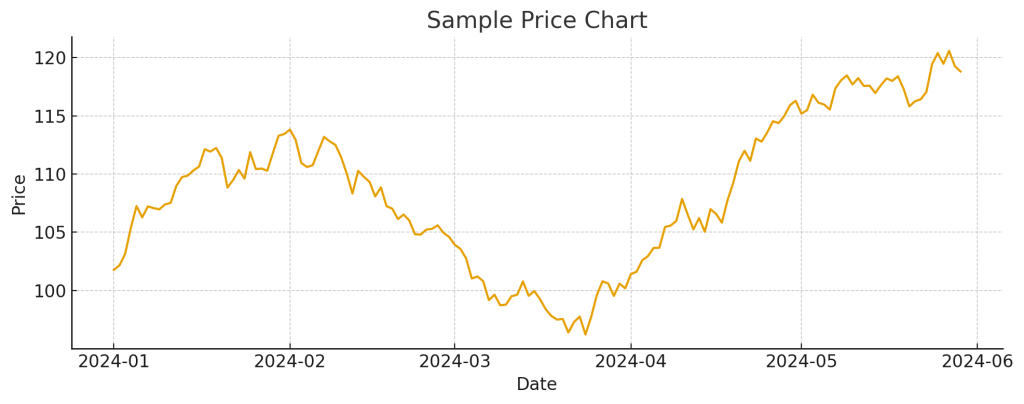
1. Price Chart

(shows the stock’s price movement over time.)

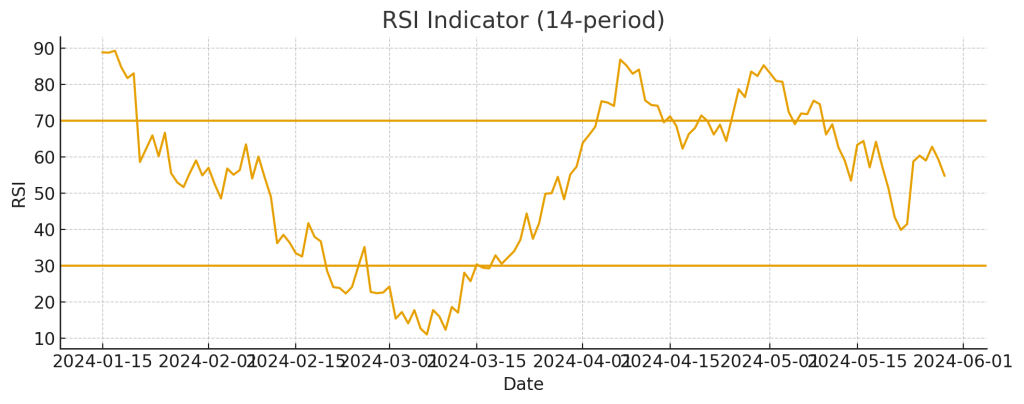
2. RSI Chart

(shows RSI oscillating between 0 and 100 with reference lines at 30 and 70.)

Overbought Example

When RSI rises above 70:

  • Momentum is strong but may be overstretched.
  • When RSI turns back below 70, the price often slows down or pulls back.

Oversold Example

When RSI falls below 30:

  • Indicates strong downside pressure.
  • When RSI rises above 30, price often stabilizes or rebounds.

How Traders Use RSI

  1. Entry Signal (Buy) : RSI crosses above 30 → possible buying opportunity.
  2. Exit Signal (Sell) : RSI crosses below 70 → possible selling signal.
  3. Trend Reversals (Divergence) Traders watch for differences between price movement and RSI movement:
    • Bullish Divergence:
      Price makes lower lows, but RSI makes higher lows.
      → Suggests a potential upward reversal.
      → Buy when RSI crosses above 30.
    • Bearish Divergence:
      Price makes higher highs, but RSI makes lower highs.
      → Suggests a potential downward reversal.
      → Sell when RSI crosses below 70.

Limitations

  • RSI can stay overbought or oversold for long periods during strong trends.
  • It may give false signals in sideways or choppy markets.
  • Works best when combined with price action, moving averages, MACD, or volume confirmation.

Conclusion

The RSI is a simple yet powerful indicator that helps traders understand momentum and identify potential turning points in the market. While it provides helpful signals for entries, exits, and trend reversals, it should not be used alone. Combining RSI with other technical tools and overall market context leads to more reliable and confident trading decisions.


Understanding Moving Averages in Trading

Moving Average (MA)

A moving average represents the average price of a security over a specific period, helping traders smooth out short-term price fluctuations and identify overall trends.

Types of Moving Averages

TypePeriod CoveredUsageTrend Focus
200-Day Moving Average (200-DMA)Last 200 trading daysLong-term trend identificationBroad market direction
50-Day Moving Average (50-DMA)Last 50 trading daysShort- to intermediate-term analysisRecent price momentum

How to Interpret a Moving Average

Golden Cross (Bullish Signal)

Definition:
Occurs when the 50-DMA crosses above the 200-DMA.

Interpretation:
→ Signals a bullish trend, indicating potential long-term upward momentum.
The crossover shows that short-term momentum is overtaking long-term averages, suggesting renewed market strength.

Confirmation:
Traders look for increasing trading volumes or other indicators (like RSI or MACD) to validate the uptrend.

Death Cross (Bearish Signal)

Definition:
Occurs when the 50-DMA crosses below the 200-DMA.

Interpretation:
→ Signals a bearish trend, indicating potential long-term downward momentum.
This suggests that short-term weakness is overtaking long-term support levels.

Confirmation:
Traders often seek validation through
• A break of key support levels
Declining trading volumes
• Other bearish indicators

Example: Golden Cross – Northern ARC Capital Ltd

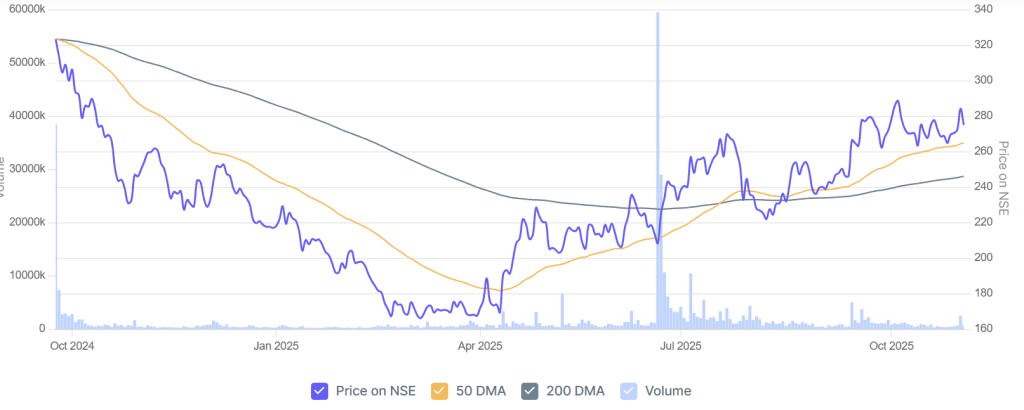
Northern ARC Capital Ltd (Chart source : https://www.screener.in)

In the chart above:

  • The blue line represents the price movement of the stock on NSE.
  • The orange line is the 50-Day Moving Average (50-DMA) — short- to mid-term trend indicator.
  • The grey line is the 200-Day Moving Average (200-DMA) — long-term trend indicator.
  • The light blue bars show the trading volume.

Observations

  1. October 2024 – March 2025:
    The stock remained in a downtrend, with the 50-DMA below the 200-DMA — a bearish phase. Prices continued to decline as momentum weakened.
  2. April – June 2025:
    The price started recovering, forming higher lows. The 50-DMA began to turn upward, indicating strengthening short-term momentum.
  3. June – July 2025: The Golden Cross
    The 50-DMA crossed above the 200-DMA, forming a Golden Cross — a bullish signal suggesting a potential long-term uptrend was beginning.
    This crossover was also supported by a spike in trading volume, adding credibility to the move.
  4. August – October 2025:
    After the crossover, prices continued to trend upward, confirming the bullish reversal.

Summary

  • A Moving Average helps visualize the trend by averaging prices over time.
  • The 50-DMA tracks short- to mid-term momentum, while the 200-DMA tracks long-term direction.
  • Golden Cross → Bullish trend may be forming.
  • Death Cross → Bearish trend may be developing.
  • Always confirm signals using other indicators (RSI, MACD, Volume) before making trading decisions.

Quick Insight: RSI and MACD

Relative Strength Index (RSI):
A momentum indicator that measures the speed and magnitude of price changes.

  • RSI ranges from 0 to 100
  • Above 70 → overbought (potential pullback)
  • Below 30 → oversold (potential rebound)

Moving Average Convergence Divergence (MACD):

A trend-following momentum indicator that shows the relationship between two moving averages of a stock’s price.

  • MACD line crossing above the Signal line → bullish signal
  • MACD line crossing below the Signal line → bearish signal

These indicators help traders confirm whether a Golden Cross or Death Cross is supported by momentum strength or weakness.

Your Turn

Have you ever used moving averages to identify entry or exit points in your trades?
What signals or confirmations do you rely on most — the crossover itself, volume trends, or other indicators?

Understanding Credit Score in India: A Complete Guide

In today’s consumer-driven market, the desire to own the latest products often surpasses income levels, making consumer credit an essential tool for fulfilling aspirations. However, securing credit from banks hinges on having a good credit score—a vital indicator of financial health.

In India, four credit bureaus approved by the Reserve Bank of India (RBI)—CIBIL, Experian, CRIF High Mark, and Equifax—assign credit scores to individuals based on their financial behavior and credit history.


What is a Credit Score?

A credit score is a three-digit number, typically ranging from 300 to 900 in India, that reflects an individual’s creditworthiness. It is calculated based on factors such as credit history, repayment behavior, and financial habits.

Score Ranges:

  • 750 and Above: Excellent – Higher chances of loan approval with favorable terms.
  • 650–749: Good – May qualify for credit, but not always at the best interest rates.
  • 550–649: Average – Higher likelihood of rejection or unfavorable loan terms.
  • Below 550: Poor – Indicates significant risk to lenders.

Factors Affecting Credit Scores

  1. Credit Composition
    Maintaining a diverse mix of credit accounts, such as car loans, credit cards, and housing loans, can positively impact your credit score. It demonstrates your ability to manage different types of credit products effectively.
  2. Payment History
    A consistent record of on-time payments is the most critical factor influencing your credit score. Late or missed payments can significantly harm your creditworthiness.
  3. Credit Utilization
    This reflects how much of your available credit limit you are using.
    • High utilization such as using 90% of your credit limit—signals a stretched financial position and negatively impacts your score.
    • Aim to keep your utilization ratio below 30% to maintain a healthy credit profile.
  4. New Credit Accounts
    Opening multiple new credit accounts or having frequent credit inquiries in a short period may signal financial risk and lower your score. Be cautious and strategic when applying for new credit.

Key Insights for Improving or Maintaining a Good Credit Score

i. Monitor Your Credit Report Regularly

  • Errors in your credit report, such as incorrect defaults or unauthorized accounts, can negatively impact your score.
  • Regularly review your report from credit bureaus like CIBIL, Experian, Equifax, or CRIF High Mark.

ii. Pay Your Bills on Time

  • Late payments on loans, credit cards, or utility bills significantly affect your score.
  • Setting up automated payments can ensure consistent on-time payments.

iii. Manage Credit Utilization

  • Keep your credit utilization ratio below 30% of your total credit limit.
  • Regularly pay off credit card balances to reduce utilization and boost your score.

iv. Avoid Excessive Credit Inquiries

  • Each loan or credit card application results in a “hard inquiry,” which can temporarily lower your score.
  • Space out credit applications and avoid applying for multiple accounts at once.

v. Maintain a Long Credit History

  • The length of your credit history impacts your score. Keeping older accounts active can be beneficial.
  • Avoid closing old credit cards unless absolutely necessary.

Factors That Don’t Affect Credit Scores

  • Savings Accounts or Fixed Deposits: These are not part of your credit profile.
  • Income Level: A credit score reflects financial behavior, not income.
  • Soft Inquiries: Checking your own credit score does not negatively impact it.

Insights for Young Professionals and Students

  • Start early by applying for a small credit card or loan to build a credit history.
  • Use secured credit cards (backed by fixed deposits) to establish credit if you’re just starting out.
  • Always pay your dues in full to avoid the temptation of carrying balances forward.

Final Thoughts

Your credit score is a reflection of your financial habits. By understanding the factors that influence your score and following these strategies, you can build a strong credit profile. A good credit score ensures access to financial opportunities and lays the foundation for a secure financial future

The Economics of Shrinkflation Explained: Parle G’s Case

Do you remember good old days when you could buy a 100 gm Parle G biscuit for ₹ 4 in 1990s. You must be wondering that today one can still buy a small pack of Parle G for just of ₹ 5, just ₹ 1 (25%) increase in more than 30 years. However, beauty lies in details. Although price has increased by just ₹ 1 in 30 years, the packet weight has been reduced to half at 50 gm.

The Parle G example is a fascinating case of “shrinkflation,” where companies keep the price of a product relatively stable but reduce the quantity or size. By reducing the weight but keeping the price almost the same, they have managed to preserve a nostalgic appeal for generations of customers who remember it as an affordable, everyday treat.

How shrinkflation helps companies manage inflation and customer perception:

Shrinkflation also allows companies to adapt to rising input costs while minimizing the shock for consumers. It’s a clever balancing act, ensuring that the brand remains affordable and accessible without significantly altering the perceived value. Over time, though, it does affect value for money, and observant consumers might feel a shift in their purchasing power even without clear price hikes.

By keeping the price stable but reducing quantity, brands like Parle G can maintain their presence as a staple in the market. Consumers don’t immediately notice the change in weight, so the brand retains its “low-cost” identity. However, for those who keep track, it’s clear that while the product is still inexpensive, the value per gram has subtly shifted over the years.

Ethical considerations:

When companies quietly reduce product sizes, they risk eroding trust among consumers who recognize that the price per gram is increasing. However, the gradual reduction in quantity can feel misleading, especially for observant consumers who realize that the value per gram has decreased. This can give the impression of manipulation, as customers end up paying more per unit over time without the transparency of a straightforward price hike.

In essence, shrinkflation may be a practical response to inflationary pressures, but its ethical standing depends on how transparent brands are about these changes. When done subtly and without clear communication, it risks creating distrust among loyal customers who may feel that they’re receiving less value than they used to. However, it is effective in keeping products accessible and in avoiding the “sticker shock” of a direct price increase, especially for those who may prioritize price over quantity.

Conclusion:

In the end, shrinkflation works as a business strategy but must be approached with sensitivity to customer perception. Balancing strategic pricing with honest communication can help companies navigate economic pressures without compromising trust.

Why Hyundai Motor India’s IPO Didn’t Attract Retail Investors?

Hyundai Motor India’s IPO, the largest in India’s history, was subscribed 2.37 times on the final day, mainly driven by qualified institutional buyers (QIBs). Retail and non-institutional investors showed significantly less enthusiasm, subscribing to only 50% and 60% of their allotted shares, respectively. This tepid response from retail investors can be attributed to several key factors:

  1. High Valuation: Although Hyundai’s price band was aligned with competitors like Maruti Suzuki, many retail investors found the pricing expensive, with little room for listing gains. The stock’s price-to-earnings ratio and overall valuation appeared unattractive, especially in the context of broader market uncertainty. This sentiment is reflected in the Hyundai IPO’s grey market premium (GMP), which initially made a high of ₹ 570 but dropped to ₹0 by 17th October. The sharp decline in GMP indicated fading expectations for immediate post-listing profits, further dampening enthusiasm among retail investors, who are often drawn to IPOs with short-term gains potential.
  2. Offer for Sale (OFS): Since the IPO was an offer for sale (OFS), it meant that the existing promoters were selling their stake rather than raising new capital for growth. Investors often prefer fresh issues that inject capital into the company for future expansion, which wasn’t the case here. The lack of fresh funds for growth-oriented initiatives could have contributed to the lukewarm reception.
  3. Market Volatility and Economic Concerns: Given the current economic uncertainties, including inflationary pressures, global slowdown concerns, and geopolitical issues, retail investors may have been hesitant to commit to new investments, especially in large-ticket IPOs.
  4. Automotive Industry Headwinds: While Hyundai maintains a strong market position, particularly in the SUV segment, the broader automotive industry is grappling with several challenges. Slowing sales, rising unsold inventory at dealerships, and increasing competition from electric vehicles (EVs) have created a cautious outlook. Moreover, long-term concerns over the future of internal combustion engine (ICE) vehicles amid growing regulatory and environmental pressures have added uncertainty to the industry’s trajectory. An example of this cautious sentiment comes from Bajaj Auto’s post-results earnings call, which highlighted the muted start to the festive season, traditionally a key period for auto sales in India. Bajaj Auto reported that sales growth during the festive season fell below expectations, with a projected increase of only 3-5%. Additionally, for the full fiscal year FY25, Bajaj Auto estimated domestic two-wheeler industry growth at a modest 5%, reflecting the headwinds the industry is facing. These broader sectoral struggles likely contributed to the cautious sentiment among retail investors in Hyundai’s IPO, as they weighed the risks of investing in a sector undergoing significant transformation.

In contrast, Qualified Institutional Buyers (QIBs) showed strong interest, subscribing heavily to the IPO. This reflects institutional confidence in Hyundai’s long-term potential, but retail investors appeared more focused on short-term risks and valuation concerns.

Understanding Asset Allocation for Investors

One of the key component of investment strategy for investors is allocation of their capital over various asset classes. Understanding of asset classes is important for allocation of capital as each asset class comes with it’s unique characteristics, risks, and potential returns.

Overview of Asset Classes:

  1. Equities (Stocks):
    • Represent ownership in a company.
    • Typically offer higher risk and reward (returns).
  2. Fixed Income Securities (Bonds):
    • Debt instruments where investors lend money to corporations or governments in exchange for periodic interest payments.
    • Generally offer lower risk and lower returns than equities .
    • Provide regular income, making them suitable for more conservative investors or those seeking stable income.
  3. Commodities:
    • Physical assets such as gold, oil, agricultural products, and metals.
    • Tend to act as a hedge against inflation and provide portfolio diversification.
    • Prices can be volatile due to supply and demand dynamics, geopolitical events, and economic factors.
  4. Cash and Cash Equivalents:
    • Include savings accounts, Treasury bills, money market funds, and short-term government bonds.
    • Highly liquid and low-risk, but offer lower returns, often below inflation rates.
    • Serve as a safe haven for capital preservation and short-term liquidity needs.
  5. Real Estate:
    • Investment in property such as land, residential, or commercial buildings.
    • Provides potential for steady income through rent and long-term appreciation in property value.
    • Can act as a hedge against inflation but may involve high initial costs, illiquidity, and location-specific risks.

Key takeaways on asset allocation:

  1. Equities:
    • High risk, high reward, and growth-oriented. Suitable for long-term capital appreciation but subject to market volatility.
  2. Fixed Income Securities (Bonds):
    • Lower risk, lower returns, and a source of regular income. Bonds act as a stabilizing force, especially in volatile markets. Sensitive to interest rate fluctuations.
  3. Commodities:
    • Provide diversification and inflation protection. Their prices are influenced by forces of global supply, demand, and geopolitical factors, offering opportunities in times of economic uncertainty. They often perform well when other asset classes (like equities) are underperforming, especially during inflationary periods. For example, gold typically rises during economic uncertainty or currency devaluation.
  4. Cash and Cash Equivalents:
    • Highly liquid and low-risk, but with minimal returns. Best used for short-term needs and as a liquidity cushion. Overexposure can lead to erosion of purchasing power over time because of inflation.
  5. Real Estate:
    • Offers income through rent and the potential for appreciation. However, it carries risks like illiquidity and regional market volatility. REITs offer a more liquid way to gain exposure to real estate markets.

Asset Allocation Strategies:

  • Conservative Investors: Focus on stability and capital preservation. They prioritize bonds, cash, and conservative assets like real estate and gold.
  • Aggressive Investors: Aim for long-term growth, accepting short-term volatility. They tend to favor equities, commodities, and higher-risk real estate investments.
  • Moderate Investors: Strive for a balanced portfolio, mixing equities and bonds, with smaller allocations to real estate and commodities to manage risk and achieve steady growth.

Dynamic Asset Allocation:

Asset allocation is not static. It evolves based on changes in an investor’s life stage, goals, or market conditions. Younger investors, with a longer investment horizon, tend to favor equities, while those nearing retirement may shift towards fixed-income assets to ensure stability and income generation. Rebalancing portfolios over time ensures the asset mix aligns with changing risk tolerance and financial goals.

Final Thoughts:

An optimal asset allocation strategy allows investors to balance risk and reward effectively, while adjusting to market shifts and personal financial goals. Periodic review and rebalancing ensures that portfolios continue to meet the needs of investors at different stages of their financial journey.

Understanding ROCE: A Key Metric for Business Efficiency

What is Return on Capital Emplyed (ROCE)?

ROCE is a crucial metric to assess how efficiently a company is utilizing its capital employed to generate profits. It provides insight into how well the company is using both equity and debt to generate returns for it’s stakeholders.

Here’s a quick breakdown of the formula and its components:

  • ROCE = EBIT / Capital Employed

Where:

  • EBIT (Earnings Before Interest and Taxes): This measures the operating profitability of a company before considering interest and taxes.
  • Capital Employed: This represents the total funds employed in the business, calculated as Total Assets – Current Liabilities. Alternatively, it can be understood as the sum of Equity capital + Non-current liabilities (long-term debt).

Why is ROCE important?

  1. Measures Efficiency: ROCE indicates how much return is generated for each dollar of capital employed, making it a critical efficiency metric.
  2. Importance in Capital-Intensive Industries: It’s especially useful for comparing companies in industries that require significant investments in assets, such as manufacturing or utilities.
  3. Comparison Across Firms: A higher ROCE signifies more efficient use of capital and can be a key differentiator when evaluating companies with similar operations.

ROCE – Limitations

  • Unutilized Cash: If a company has large reserves of unutilized cash, it might distort the ROCE figure, making it less meaningful.
  • Fluctuations in Capital: Since capital employed can change over time, the timing of the calculation can affect the accuracy of the ROCE.
  • Some analysts may choose to calculate ROCE based on the average capital employed based on the average of opening and closing capital employed.

Example: Hindustan Unilever Ltd (HUL) ROCE Calculation

₹ in Crores Mar-24 Mar-23 Mar-22 Mar-21
EBIT 14,264 13,460 11,980 10,723
Total Assets (A) 78,499 73,087 70,517 68,757
Current Liabilities (B)12,876 12,028 11,280 11,103
Capital Employed (A – B)65,623 61,059 59,237 57,654
ROCE (%)22%22%20%19%
ROCE Calculation – Hindustan Unilever (HUL)

Note: 1 Crore =10 Mn

HUL Data source: Moneycontrol

Observation:

Hindustan Unilever’s ROCE improved from 19% in March 2021 to 22% in March 2024, indicating increased efficiency in utilizing its capital to generate profits.

Conclusion

In essence, ROCE provides a holistic view of how well a company is generating profits from its long-term funding sources (both equity and debt).

Investing ideas:

Companies with rising or stable ROCE tend to be attractive to investors, as they reflect efficient capital management and potential for long-term growth. On the other hand, companies with declining or volatile ROCE might signal inefficiency or difficulties in maintaining profitability.

Impact of Interest Rate Changes on Bond Prices and Debt Fund Returns

Understanding the Inverse Relationship Between Bond Prices and Interest Rates

Bonds pay a fixed interest, known as the coupon rate. When market interest rates change, the value of existing bonds adjusts to align with newly issued bonds at the current rates, leading to an inverse relationship between bond prices and interest rates.

Impact of Interest Rate Movements on Bonds and Debt Funds

1. Rising Interest Rates:

  • Effect on Bonds: When interest rates rise, new bonds are issued with higher coupon rates (e.g., 6%). This makes existing bonds with lower coupon rates (e.g., 5%) less attractive. To compensate for the lower yield, the price of these bonds must fall to offer a comparable yield to new bonds.
  • Example:
    If you hold a bond with a face value of ₹1000 and a coupon rate of 5% (₹50 interest annually), when new bonds are issued at 6%, investors will demand a lower price for your bond. To match the 6% yield, the bond’s price must fall below ₹1000.
  • Effect on Debt Funds: Since the prices of existing bonds fall, the Net Asset Value (NAV) of debt mutual funds also decreases, resulting in lower returns.

2. Falling Interest Rates:

  • Effect on Bonds: When interest rates fall, new bonds are issued with lower coupon rates (e.g., 4%). Existing bonds with higher coupon rates (e.g., 5%) become more attractive, increasing their market value.
  • Example:
    If interest rates drop and new bonds are issued at 4%, your bond with a 5% coupon rate becomes more desirable. Investors would pay more than ₹1000 for your bond, boosting its price.
  • Effect on Debt Funds: The increase in bond prices leads to capital gains for bondholders, resulting in higher returns for debt mutual funds.

Investment Strategies for Managing Interest Rate Risk in Debt Funds

Rising Interest Rate Scenarios:

  • Short-Duration Funds:
    In a rising interest rate environment, short-duration bonds or debt funds are preferable. These bonds mature quickly, allowing reinvestment at higher rates without significant price depreciation.
    • Why? Short-term bonds are less sensitive to interest rate changes, reducing the impact of rising rates on bond prices.
    • Funds to Consider: Liquid funds, ultra-short-term bond funds.

Falling Interest Rate Scenarios:

  • Long-Duration Funds:
    Long-duration bonds gain the most during falling interest rates because their prices increase more with the decline in interest rates.
      • Why? Longer-duration bonds lock in higher coupon rates, and their prices rise as newer bonds are issued at lower rates.
      • Funds to Consider: Gilt funds, long-duration debt funds.
    • Dynamic Bond Funds:
      These funds adjust the portfolio’s duration based on the interest rate outlook. Fund managers switch between long and short-term bonds depending on market expectations, allowing investors to gain in both rising and falling interest rate environments.

    Other Strategies:

    • Fixed Maturity Plans (FMPs):
      FMPs lock in yields for a fixed term, offering stable returns. They may not be as attractive in a rising interest rate environment, but in stable or falling rate periods, they provide predictable returns, insulating investors from market fluctuations.

    Key Takeaways for Investors:

    • Monitor the Interest Rate Environment: Investors should keep an eye on interest rate trends to adjust their portfolio allocations accordingly.
    • In Rising Rate Scenarios: Focus on short-duration funds or strategies that reduce interest rate risk.
    • In Falling Rate Scenarios: Consider long-duration funds or dynamic bond funds to capture gains from rising bond prices.
    • Use FMPs for Stability: In stable or falling rate environments, FMPs offer predictable returns with lower risk.

    By following these strategies, investors can improve their returns while managing the risk associated with fluctuating interest rates in debt mutual funds.